
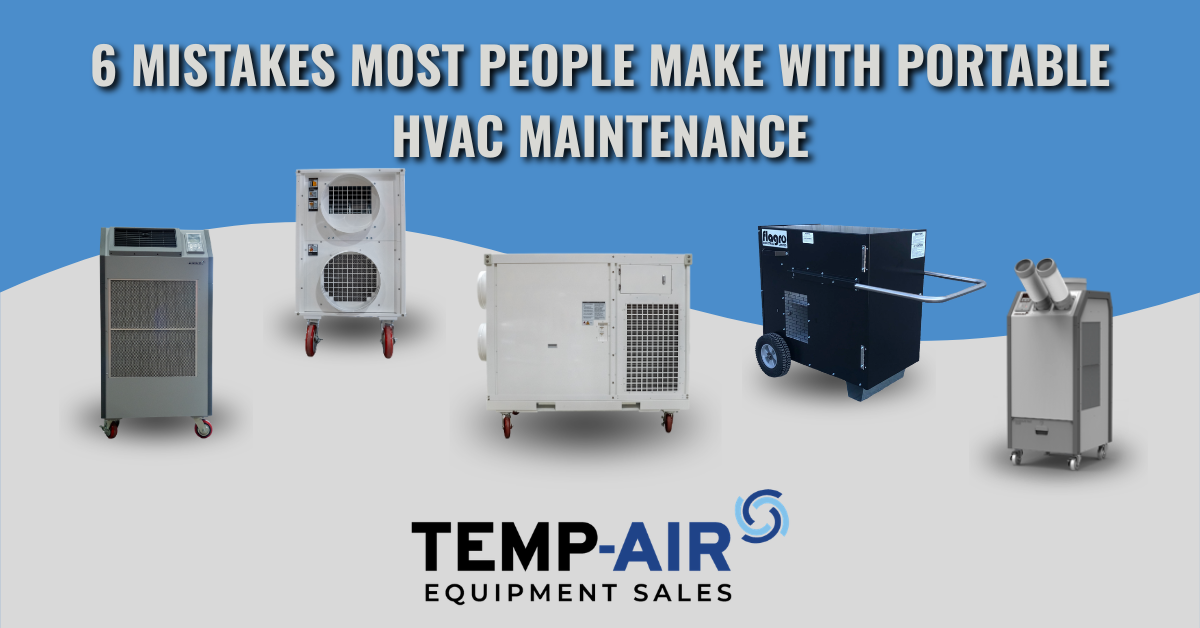
6 Mistakes Most People Make With Portable HVAC Maintenance
TL;DR: Portable HVAC Maintenance Checklist
- Clean Washable Aluminum Filters: Prevents restricted airflow, overheating, and potentially catastrophic strain.
- Inspect and clean coils annually: Removes hard water mineral deposits to maintain heat transfer efficiency and prevent short-cycling.
- Clear and maintain drain lines: Utilize wet/dry vacuum clearing and annual treatments to prevent algae blockages, water pooling, and system freeze-ups.
- Lubricate moving parts: Follow manufacturer manual guidelines rigorously to prevent premature mechanical wear in harsh environments.
- Monitor run hours: Track daily usage and schedule comprehensive service promptly at the 5-year mark to stay ahead of mechanical fatigue.
- Test limit switches: Guarantee safety systems and airflow sensors shut down the unit automatically if intakes are blocked or ducts are crushed.
To ensure 100% uptime during a crisis, a commercial portable HVAC unit requires strict, routine maintenance that protects its mechanical components, prevents airflow starvation, and significantly extends its operational lifespan. Neglecting these systems creates a massive operational vulnerability, leaving you without mission-critical climate control the moment your primary central AC fails. Here are the exact steps you must take to secure your fleet.
How Do You Maintain Portable HVAC Filters?
Cleaning your filters is one of the single most critical steps to prevent restricted airflow. When a commercial dehumidifier or spot cooler operates in a dusty industrial environment, the filter can quickly become clogged, forcing the system to overwork as it struggles to pull in ambient air.
Because Airrex Portable Climate Equipment by TEMP-AIR® Equipment Sales filters are constructed from heavy-duty aluminum, they should never be discarded; instead, they require thorough washings. If left uncleaned, this unnecessary strain on internal components could lead to incomplete cooling, frozen evaporator units, and eventually catastrophic failure.
Why Is Annual Coil Cleaning Necessary?
Inspecting and cleaning your coils annually with a mild cleaner ensures that hard water mineral deposits do not insulate the coils. Over time, airborne debris and minerals form a crust over the heat exchanger, acting as a barrier that severely reduces heat transfer. This ruins system efficiency, forcing the unit to run longer cycles to achieve your desired temperature, which drives up energy costs and accelerates mechanical fatigue.
How Do You Maintain Condensate Drain Lines?
For units actively managing humidity, you must maintain condensate drain lines with routine wet/dry vacuum clearing to stop algae or debris from causing water pooling. Because portable air conditioners and dehumidifiers extract gallons of moisture from the air daily, a blocked drain line will cause the condensate pan to overflow. Applying an acid treatment annually helps eliminate these blockages, preventing system freeze-ups and stopping stagnant water from damaging your facility’s floors or equipment.
Why Should You Lubricate Moving Parts?
Continuous operation in highly demanding environments—such as dusty construction sites, humid disaster zones, or chemical-heavy warehouses—can lead to accelerated mechanical wear and tear. To combat this friction, you must lubricate all moving parts per the manufacturer’s manual to prevent premature degradation. Keeping bearings and fan motors properly greased reduces internal heat and prevents the costly downtime associated with seized mechanical components.
How Do You Track Run Hours for Replacement?
You should carefully monitor the unit’s daily run hours and track its usage to properly forecast its lifecycle and maximize your return on investment. While a well-maintained commercial dehumidifier can last 5 to 10 years, heavy usage—such as running a unit 10 to 12 hours a day—will drastically accelerate wear. To prevent unexpected failures during an emergency, plan for a comprehensive professional service or total unit replacement once the equipment hits the five-year operational mark.
Why Is Testing Limit Switches Crucial?
It is critically important to manually test high-limit switches and airflow sensors to guarantee the unit will shut down safely before overheating. Portable units operate in dynamic, high-traffic areas where an intake can easily be blocked by a stray box or a duct can be crushed by heavy machinery. These safety systems act as your last line of defense, automatically cutting power to the unit to prevent electrical fires and permanent mechanical destruction.
Ready to secure your fleet?
Whether you need replacement parts shipped within 24 hours, expert maintenance guidance, or a brand-new emergency backup unit, contact TEMP-AIR® Equipment Sales to keep your equipment running flawlessly.
- Call TEMP-AIR® Equipment Sales today at 1-888-535-8841
- Visit our website to explore our full range of portable cooling solutions.
Frequently Asked Questions:
Question: How often should I change the filter on a commercial portable AC?
Answer: You should change the filters on your commercial portable HVAC units monthly. Clogged filters restrict airflow, causing the system to overwork, which can lead to catastrophic compressor failure, frozen coils, and severely decreased efficiency.
Question: When should I replace my commercial portable HVAC unit?
Answer: You should carefully track daily run hours and have the unit professionally serviced or replaced once it hits the 5-year mark. Units running 10-12 hours daily in harsh environments may only yield four years of reliable service, so monitoring this schedule is the best way to maintain 100% uptime.
Question: How do you prevent drain line clogs in portable cooling units?
Answer: You prevent drain line clogs by performing routine preventive maintenance that includes clearing the lines with a wet/dry vacuum and applying an acid treatment annually. This eliminates the algae, mineral scale, and debris blockages that cause water to overflow and damage your facility.