
How To Use Portable Dehumidifiers to Maximize Vertical Farming Yields (Without Losing Crops To Mold)
TL;DR: Quick Answer
- The core issue: Vertical farming requires strict environmental control; without it, plant transpiration traps water vapor, leading to crop-destroying mold, mildew, and equipment corrosion.
- The ideal climate: Humidity control is essential because plants are not static; they thrive in significantly different relative humidity (RH) levels depending on their current growth stage.
- The solution: Commercial dehumidifiers (like LGRs or desiccants) actively extract excess moisture, prevent fungal growth, and can even recirculate recaptured water to drastically reduce your farm’s utility costs.
- Next steps: Partner with TEMP-AIR® Equipment Sales to equip your facility with dependable, rental-ready, and EPA-compliant dehumidification systems.
What is a vertical farming dehumidifier and how does it work?
A vertical farming dehumidifier is a commercial-grade HVAC unit designed to extract the excess water vapor generated by plant transpiration in dense indoor growing environments. By actively pulling moisture from the air, these systems maintain precise humidity levels, allowing indoor crops to thrive without the threat of fungal diseases.
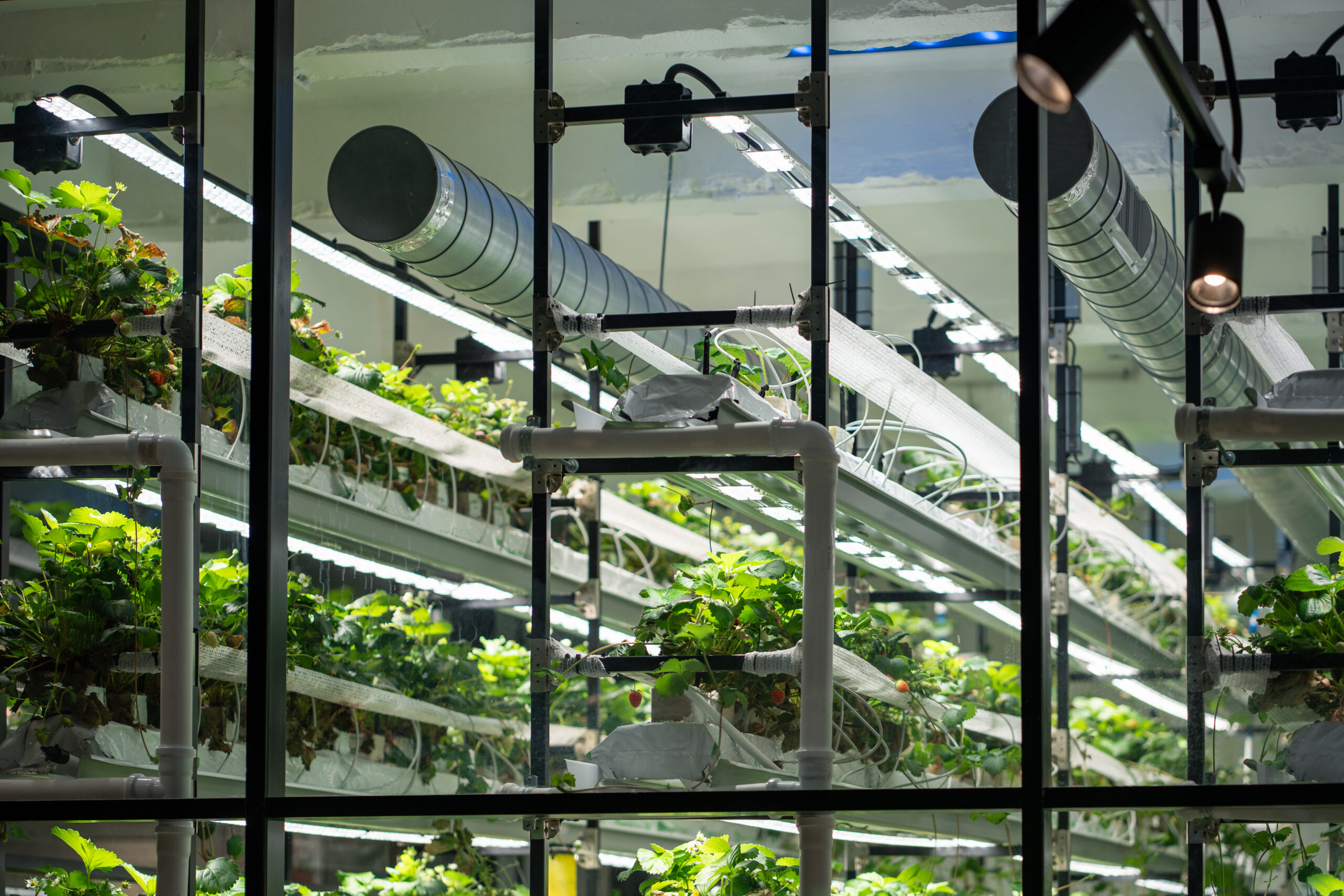
In recent years, indoor farming has evolved from single-plane fields into highly efficient vertical farms featuring stacked growing planes. While this method dramatically increases growing space, it naturally restricts air circulation and heavily concentrates moisture. A commercial dehumidifier solves this by constantly cycling the stagnant air, extracting the trapped water vapor, and returning dry, climate-controlled air back into the facility.
Why is humidity control critical for indoor agriculture?
Humidity control is essential because plants are not static; they thrive in significantly different relative humidity (RH) levels depending on their current growth stage. Precision climate management allows farmers to mimic nature’s ideal conditions, ensuring plants grow faster, yield more, and remain hardy against disease.
- Seedling Stage (70% to 80% RH): High humidity is vital for young plants with small root systems, as it prevents them from drying out while they primarily absorb moisture through their leaves.
- Vegetative & Early Flowering (50% to 60% RH): As the root system strengthens, lowering the humidity encourages the plant to pull more water and nutrients from the soil or hydroponic medium.
- Flowering Phase (40% to 50% RH): Maintaining a drier environment at this stage is critical to prevent “bud rot” and fungal growth within dense foliage.
- Late Ripening (Below 40% RH): During the final two to three weeks of flowering, some growers drop levels as low as 20% to stress the plant into increasing oil and flower production.
Furthermore, modern dehumidification systems allow vertical farms to recapture water vapor and circulate it directly back into the growing system. For example, in agricultural hubs like California, growing a single acre of lettuce outdoors can require up to 3,500 cubic meters of water. According to data verified by organizations like the U.S. Department of Agriculture (USDA), implementing a water-capturing dehumidification system in a vertical farm can drop that requirement to as low as 14 cubic meters, resulting in drastically reduced resource costs.
What happens when indoor growing climates go unchecked?
When indoor growing climates go unchecked, excessively high humidity causes explosive growth of fungus, mildew, and mold, which frequently leads to complete crop loss. Conversely, dropping to extremely low humidity levels stunts plant growth, resulting in diminished, low-quality yields.
Failing to moderate moisture doesn’t just hurt the plants; it compromises your infrastructure. High humidity corrodes sensitive metal equipment and ventilation systems. If mold takes root inside your equipment, it becomes incredibly difficult to eradicate. The harsh remediation chemicals required to clean these systems pose severe contamination risks to your delicate crops. By maintaining optimal indoor air quality (IAQ) as recommended by the American Society of Heating, Refrigerating and Air-Conditioning Engineers (ASHRAE), you protect both your organic assets and your capital equipment.
How do I choose the right commercial dehumidifier for my vertical farm?
To choose the right commercial dehumidifier for your vertical farm, you must match your facility’s temperature range and moisture load with either a Low-Grain Refrigerant (LGR) or a desiccant dehumidifier. Partnering with a reliable supplier ensures you get the exact capacity your indoor farm requires.
When equipping your fleet or facility, consider these industry-leading portable dehumidification solutions from TEMP-AIR® Equipment Sales:
- For General Moisture Removal (LGR Dehumidifiers): Units like the Airrex by TEMP-AIR® Equipment Sales ADH-8000R utilize refrigerant coils to cool the air and condense moisture out rapidly. This unit is built for heavy-duty process drying and features a built-in drain pump and digital controls. Furthermore, it utilizes the new R-454B refrigerant, ensuring your facility is future-proofed and fully compliant with the latest U.S. Environmental Protection Agency (EPA) AIM Act regulations.
- For Absolute Humidity Control (Desiccant Dehumidifiers): If your facility requires precise humidity regulation regardless of temperature drops, desiccant units like the Phoenix D385 are the gold standard. They pass air over a silica gel-coated wheel to absorb moisture naturally, achieving significantly lower relative humidity levels without producing condensation.
Ready to protect your yield?
At TEMP-AIR® Equipment Sales, we don’t just deliver a product and walk away. Our vision is to be the single most trusted provider of portable climate equipment in the country. From our 24/7 technical support to direct-to-consumer shipping, our experts are always on standby to ensure your vertical farm remains comfortable, climate-controlled, and highly profitable.
Ready to protect your yield? Click this link to visit our website or call 1-888-535-8841 to get the dependable equipment you need to maintain the perfect growing climate for your indoor farm.
FAQs:
Question: Why can’t I just use standard ventilation instead of a commercial dehumidifier in a vertical farm?
Answer: While ventilation helps move air, standard fans cannot keep up with the intense water vapor generated by dense plant transpiration in stacked growing planes. Relying solely on ventilation can leave moisture trapped between the layers, causing stagnant air zones that trigger explosive mold growth, damage metal equipment, and ruin your crops. Commercial dehumidifiers actively extract that excess moisture from the air to maintain a stable, uniform climate.
Question: How do relative humidity (RH) requirements change for different plant growth stages?
Answer: Plants require strictly different humidity levels as they mature to maximize health and yield:
- Seedling Stage (70% to 80% RH): High humidity stops young plants with small roots from drying out, allowing them to absorb moisture through their foliage.
- Vegetative & Early Flowering (50% to 60% RH): Lower humidity encourages the strengthening roots to actively draw more nutrients from the growing medium.
- Flowering Phase (40% to 50% RH): A drier climate is essential here to prevent dense foliage from trapping moisture and developing “bud rot” or fungal diseases.
- Late Ripening (Below 40% RH): Dropping levels at the very end stresses the plant into maximizing oil and flower production.
Question: What is the difference between an LGR and a desiccant dehumidifier for indoor farming?
Answer: The choice depends entirely on your farm’s operating temperature and humidity targets. Low-Grain Refrigerant (LGR) units (like the Airrex ADH-8000R) use cooling coils to quickly condense moisture out of the air and are ideal for standard, warm-temperature growing cycles. Desiccant dehumidifiers (like the Phoenix D385) pass air over a silica gel wheel to absorb moisture naturally, making them the gold standard for pulling relative humidity down to extremely low levels, even if your facility undergoes major temperature drops.
Question: Can implementing a dehumidification system really cut down my farm’s water utility costs?
Answer: Yes, significantly. Modern commercial dehumidification systems allow vertical farms to recapture the water vapor pulled from the air and recirculate it directly back into the irrigation system. According to data verified by the USDA, implementing a water-capturing system can reduce water requirements from up to 3,500 cubic meters down to as low as 14 cubic meters compared to traditional outdoor fields—massively lowering your overall resource spend.