
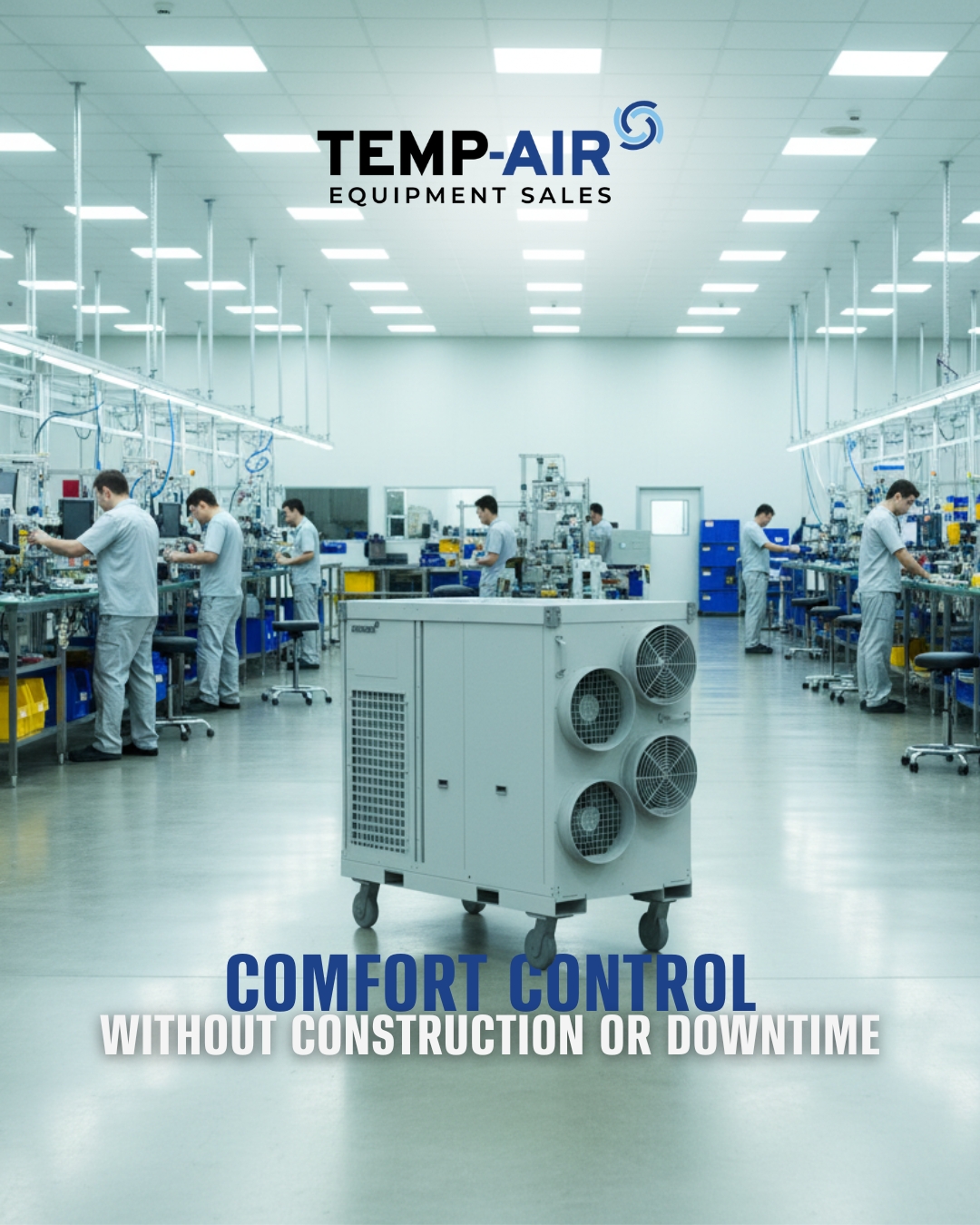
The All-in-One Solution: Why Portable Heat Pumps are the Ultimate Triple-Threat in Climate Control
TL;DR: A Quick Overview of Heat Pump Technology
- Triple-Threat Performance: Heat pumps provide cooling, heating, and dehumidification in a single, unified system.
- Operational Flexibility: For facility managers, portable solutions transform unpredictable capital expenditures into manageable operating expenses.
- Mission-Critical Reliability: Provides flexible, localized relief and acts as an emergency fail-safe for high-stakes environments.
Why Outdated, Disconnected Climate Systems Are Draining Your Budget (And What to Do About It)
In the modern commercial landscape, maintaining precise indoor climate control is no longer just about comfort; it is a critical strategy for protecting assets, ensuring worker safety, and safeguarding your bottom line. Yet, many facility managers continue to rely on aging, segmented HVAC infrastructure. As the regulatory landscape shifts and equipment costs rise, relying on a patchwork of boilers, air conditioners, and standalone dehumidifiers is a costly mistake.
The ultimate solution lies in a singular, unified technology. By embracing the triple-threat versatility of heat pumps, modern businesses are achieving unparalleled efficiency, driving aggressive ROI, and future-proofing their facilities against strict new environmental mandates
What is a Heat Pump? The Magic of Moving Heat
A heat pump is a highly efficient climate control system that provides heating, cooling, and dehumidification by transferring thermal energy from one environment to another, rather than generating heat from a combustible fuel.
To understand why this is a game-changer, we must look at the mechanics of the vapor compression cycle. The process relies on four main components:
- The Compressor: The prime mover of the system, which pressurizes the refrigerant vapor, raising its temperature.
- The Condenser: A heat exchanger where the high-pressure gas releases its heat and condenses into a liquid.
- The Expansion Valve: A device that rapidly lowers the pressure and temperature of the liquid refrigerant.
- The Evaporator: A second heat exchanger where the cold refrigerant absorbs unwanted ambient heat, cooling the surrounding air.
The true magic of the heat pump, however, is the reversing valve. This vital component reverses the flow of the refrigerant through the system. In the summer, the unit absorbs indoor heat and rejects it outside. In the winter, the reversing valve flips the cycle, absorbing ambient heat from the outside air and pumping it indoors. Because moving heat requires far less electricity than creating it, the energy savings are profound.
The Versatility Narrative: Cooling, Heating, and Industrial Dehumidification
The ability of a heat pump to adapt to any season makes it the ultimate all-in-one climate tool. Energy Efficient Heat Pumps eliminate the need for redundant systems, expertly managing your facility’s environment through three distinct modes:
- Crisp, Reliable Cooling: During sweltering summer months, heat pumps act exactly like traditional air conditioners, delivering powerful, targeted cooling to keep your workforce productive and your machinery from overheating.
- Efficient, Combustion-Free Heating: When temperatures plummet, heat pumps provide safe, emission-free warmth. Because they operate electrically, they eliminate the carbon monoxide risks and combustion by-products associated with direct-fired gas heaters.
- Year-Round Industrial Dehumidification: Moisture is a silent killer in commercial spaces, leading to mold growth, compromised structural integrity, and damaged inventory. Heat pumps excel at pulling excess moisture from the air, maintaining safe, comfortable relative humidity levels without requiring a secondary, standalone dehumidifier.
Why are heat pumps considered a high-return investment for facility managers?
Heat pumps offer a superior return on investment by combining high-efficiency climate control with significant long-term operational savings.
Because these systems move existing heat rather than generating it through combustion, they achieve a high Coefficient of Performance (COP) that drastically reduces monthly utility bills compared to traditional HVAC setups. Furthermore, consolidating heating, cooling, and dehumidification into a single, unified system simplifies maintenance schedules and lowers the overall cost of replacement parts and labor.
What strategic financial advantages do portable heat pumps provide?
Portable heat pumps maximize operational ROI by offering a versatile “plug-and-play” solution that prevents costly downtime and provides high-efficiency climate control exactly where it is needed. These units allow facilities to address specific thermal challenges without the long lead times or heavy infrastructure costs of permanent HVAC installations. By integrating portable technology, businesses can maintain perfect environmental conditions while keeping their balance sheets flexible.
- Immediate Fail-Safe: Portable units act as a critical insurance policy against primary HVAC failure. In mission-critical environments like data centers or healthcare facilities, units such as the Airrex by TEMP-AIR® Equipment Sales AHSC series can be deployed instantly to prevent catastrophic equipment overheating or compromised patient safety.
- Targeted Spot Cooling: Rather than overworking a central system to cool a single high-heat zone, portable heat pumps provide surgical climate control. This reduces wear and tear on your main infrastructure and slashes energy waste by focusing cooling power only on specific “hotspots” or sun-facing rooms.
- Temporary Site Solutions & CapEx Avoidance: For seasonal events or construction projects, portable units eliminate the need for expensive, permanent ductwork. Choosing to rent or purchase portable equipment allows managers to bypass heavy Capital Expenditure (CapEx) and instead utilize predictable Operational Expenditure (OpEx), ensuring access to the latest R-454B compliant technology without a massive upfront investment.
Comparison: Portable Heat Pumps vs. Traditional HVAC
| Feature | Traditional HVAC Systems | Portable Heat Pump Solutions |
| System Architecture | Requires separate AC, boiler/furnace, and dehumidifiers. | 3-in-1 Design: Cools, heats, and dehumidifies from a single unit. |
| Installation & Setup | Expensive, requires complex ductwork and professional installation. | Plug-and-Play: Rolls on casters, uses standard electrical outlets. |
| Energy Source for Heat | Often burns fossil fuels, creating combustion safety risks. | 100% Electric: Safely moves ambient heat without exhaust or open flames. |
| Flexibility & Zoning | Fixed in place; struggles to manage isolated hot/cold spots. | Highly Mobile: Easily relocated to target specific servers, labs, or temporary tents. |
| Emergency Readiness | Vulnerable to total system shutdowns and extended repair downtime. | Immediate Fail-Safe: Rapid deployment prevents operational halts during disasters. |
Featured TEMP-AIR® Equipment Sales Portable Heat Pump Units
We stock a range of professional-grade units designed to handle everything from small server rooms to massive industrial warehouses.
- Airrex by TEMP-AIR® Equipment Sales AHSC-14R (1.25-Ton Solution): This compact unit is the gold standard for office “hotspots” and small IT closets. It delivers 13,600 BTU/h of cooling and 13,000 BTU/h of heating capacity, operating on a standard 115V circuit, making it the ultimate plug-and-play solution for immediate relief.
- Airrex by TEMP-AIR® Equipment Sales AHSC-18R (1.5-Ton Workhorse): Built for more demanding commercial environments, the AHSC-18R provides 16,800 BTU/h of cooling. It features a concentrated cold air discharge and a high-efficiency heat pump cycle that excels in dehumidifying damp construction sites or basements.
- Airrex by TEMP-AIR® Equipment Sales AHSC-42R (3.5-Ton Industrial Unit): When large-scale climate control is required, the AHSC-42 delivers a massive 42,000 BTU/h. Despite its power, it remains remarkably portable on heavy-duty casters, making it ideal for temporary event tents or large-scale facility HVAC failures.
- Airrex by TEMP-AIR® Equipment Sales AHSC-60R (5-Ton Powerhouse): Our most powerful portable heat pump, the AHSC-60R, provides 60,000 BTU/h of climate-controlled air. This unit is specifically engineered for industrial applications and large data centers where high-volume airflow and precision temperature management are non-negotiable.
Ready to take control of your ROI?
Don’t let outdated HVAC standards or unpredictable weather drain your bottom line. Contact the experts at TEMP-AIR® Equipment Sales today to secure your high-efficiency portable heat pump. Whether you need an immediate fail-safe or a long-term future-proofed solution, we have the inventory and expertise to protect your facility.
Call Us at 1-888-535-8841 or Visit the TEMP-AIR® Equipment Sales Website to secure your portable heat pump today!
People Also Ask (FAQ)
Question: How exactly does a heat pump work?
A heat pump works by transferring heat from one place to another using a continuous refrigeration cycle. In cooling mode, it extracts heat from indoor air and releases it outside. In heating mode, a reversing valve switches the flow of refrigerant, allowing the system to extract ambient heat from the outdoor air and pump it indoors.
Question: What is R-454B refrigerant and why is it important?
Answer: R-454B is an eco-friendly, next-generation refrigerant designed to replace the heavily polluting R-410A. It has a Global Warming Potential (GWP) of just 466—a 78% reduction from older standards. It is becoming the industry standard due to the EPA’s AIM Act, which mandates the phase-out of high-GWP refrigerants starting in 2025.
Question: Are portable heat pumps energy efficient?
Answer: Yes. Because portable heat pumps move thermal energy rather than creating it from scratch via combustion, they are incredibly efficient. They often produce more heating energy output than the electrical energy they consume, lowering utility costs while providing highly targeted climate control.
Question: Can a portable heat pump replace my commercial dehumidifier?
Answer: In many applications, yes. Most portable heat pumps naturally dehumidify the air as part of the cooling process. This dual-functionality makes them highly effective at pulling excess moisture out of the air in server rooms, warehouses, and water-damaged facilities without the need for a secondary machine.